
PREVENTATIVE GYNAECOLOGY
Private Cervical Screening (Smear Test / Pap / HPV)
Access rapid, clinician-led cervical health screenings and high-sensitivity HPV tracking in a completely safe, gentle, and confidential London clinic.
CLINICAL OVERVIEW
High-Sensitivity Diagnostics
Early detection saving lives. Total clinical gentleness.
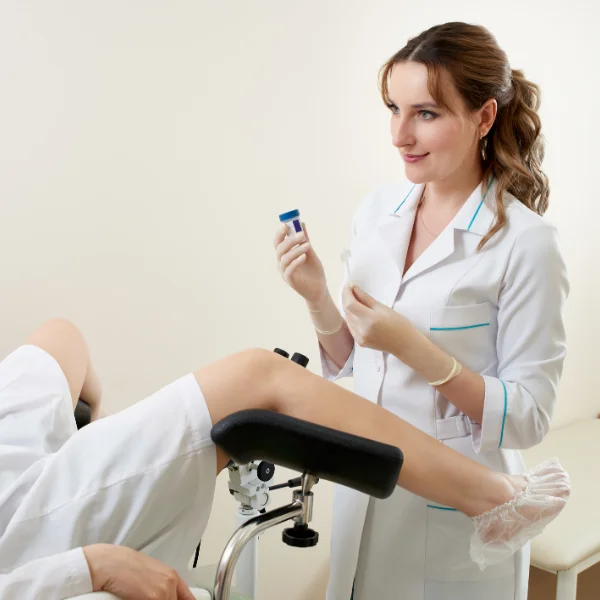
Cervical screening is one of the most vital preventative health measures available for women’s long-term well-being. Rather than detecting active cancer directly, the primary focus of the modern test is to identify high-risk strains of the Human Papillomavirus (HPV) and early, asymptomatic cellular changes (dyskaryosis) before they can ever progress.
Experienced Female Practitioners Available
High-Sensitivity Liquid Cytology Labs
Secure, Private Electronic Reporting
DIAGNOSTIC CRITERIA
What We Screen For
Our high-sensitivity liquid cytology panels isolate multiple crucial biomarkers from a single collection. By utilizing precise molecular tracking alongside advanced cellular microscopy, our laboratory team can verify exact viral presence and structural tissue mutations simultaneously.
High-Risk HPV Strains
Molecular detection of viral strains most commonly linked to cellular mutations.
Cervical Dyskaryosis
Microscopic isolation of low-grade or high-grade abnormal cell changes.
Baseline Vaginal Health
Initial screening for underlying tissue inflammation or localized infections.
CLINICAL PROTOCOL
Your Screening Journey Step-by-Step
Pre-Screening Review
We discuss your screening history, explain the process step-by-step, answer any questions, and ensure you feel completely relaxed and in control.
The Sample Procedure
Our highly experienced clinicians use ultra-gentle manual techniques and fine tools to quickly collect a small sample of surface cells from the cervix in just a few minutes.
Molecular Processing
Your sample is safely processed through our premium partner laboratories, screening first for high-risk HPV variants and analyzing cell changes under deep microscopy.
FAQ
Frequently asked questions
When should I get screened?
Following standard clinical guidance, women aged 25 to 49 should generally undergo screening every 3 years, while women aged 50 to 64 should be tested every 5 years. You can book a private check anytime if you are overdue.
Does a smear test hurt?
You may experience a brief moment of mild pressure or slight physical discomfort during the speculum insertion, but the test is not painful. Our female practitioners utilize gentle techniques to keep you comfortable.
How fast do results arrive?
Your sample is sent to our partner laboratories immediately. Certified electronic diagnostic reports and comprehensive screening interpretations are returned securely to you within 3 to 5 working days.
What if high-risk HPV is found?
Testing positive for HPV does not mean you have cancer; it simply means the virus is present. Our medical team will review the lab report to see if any cell changes occurred, providing clear guidance on the next monitoring steps.
Can I test during my period?
For optimal diagnostic accuracy, it is highly recommended to arrange your appointment for a day when you are not bleeding. Mid-cycle dates usually yield the cleanest cellular samples for laboratory microscopy.
Is the HPV vaccine covered?
The cervical screening panel looks for active viral presence but does not include the vaccine injection itself. If you are looking to update your protection records, our team can arrange separate immunisation courses for you.
NEXT STEPS
Prioritize Your Health with Professional Screening
Schedule your private cervical screening panel with our expert clinical team today to secure a completely safe, supportive, and highly precise health validation.